The Death of the 1% Sample: Why AI-Driven QA is Mandatory
May 28, 2024
•min read
QA & Compliance
By IdentityCall AI Team | Insights | 6 min read
The “Sampling” Problem
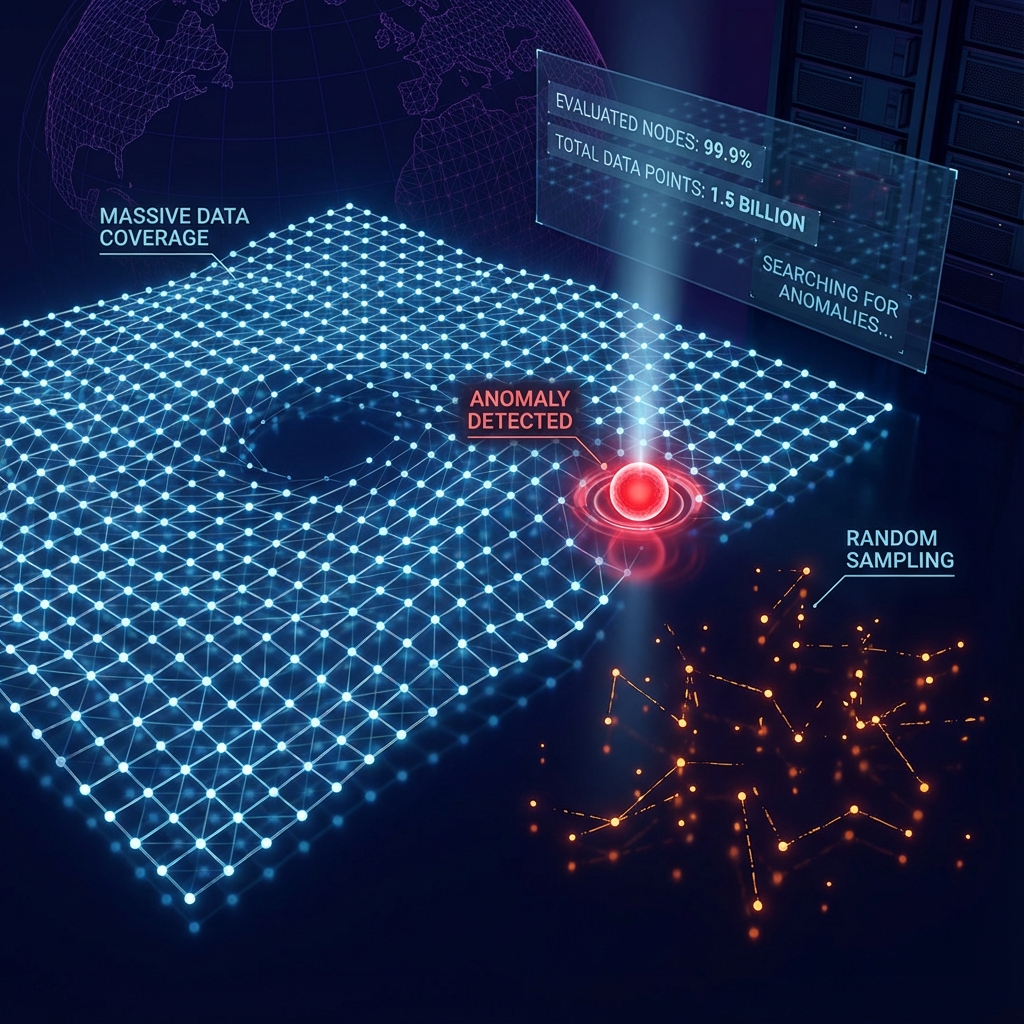
For decades, Contact Center Quality Assurance (QA) has relied on random sampling. Sampling is a valid statistical method for estimating averages; it is the wrong tool for finding individual calls. If a team reviews, say, 2% of calls, the other 98% of individual interactions go unreviewed.
Reviewed and corrected 8 September 2026.
In an era of strict regulations (GDPR, TCPA, FCA) and high consumer expectations, this “blind spot” is an unacceptable liability.
Why 100% Coverage is the New Baseline
AI-driven QA doesn’t just “help” human reviewers—it replaces the sampling model entirely with 100% automated coverage.
1. The Compliance Safety Net
- Manual QA: Finds a compliance breach (e.g., failure to read a Mini-Miranda) only when the sampled call happens to be the one where it was skipped.
- AI QA: Checks every submitted call for the required script and flags the ones where it appears to be missing. A model can still miss one, so flagged calls need review.
- Result: A record of what was checked on every call, instead of a sample.
2. Identifying “Long Tail” Issues
Random sampling catches obvious, frequent problems. It misses the “black swans”—rare but catastrophic interactions (e.g., a specific agent snapping at a customer, or a new type of fraud attempt). AI monitors the long tail, surfacing anomalies that would never be found manually.
3. Objective vs. Subjective Scoring
Human scoring is plagued by bias (mood, relationship with agent, fatigue).
- Human: “I think he sounded a bit rude.”
- AI: “Pitch variance exceeded 40% and interruption rate was 15% (Threshold: 10%). Score: 3/5.”
A model applies the same rubric to every call and shows its reasoning. It can still be wrong, so calibrate it against reviewer judgments before using scores for performance decisions.
Example workflow: fintech compliance
Suppose a mid-sized fintech lender moves from manual sampling to automated analysis of every submitted call. A workable rollout looks like this:
- Review the calls flagged for missing disclosures, starting with the most recent.
- Investigate recurring causes: a script change, a new hire, a queue where the disclosure gets cut off.
- Compare the flagged share over time after coaching, and keep the counts next to the number of calls checked.
The Human in the Loop
AI doesn’t replace the QA manager. It elevates them from a “call listener” to a “data analyst.” Instead of hunting for errors, they spend their time coaching based on the errors the AI has already found.
Stop guessing with 1%. Start knowing with 100%. Start your free trial
Tags: